
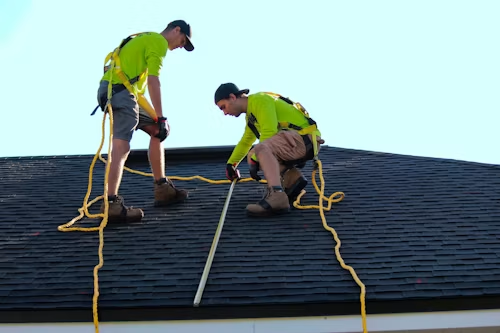
A leak in the ceiling or a few shingles in the yard after a storm can raise an uncomfortable question: can this be fixed, or does the whole roof need to come off? It’s one of the biggest decisions homeowners face, and the answer isn’t always obvious. A repair that should have been a replacement wastes money, but so does replacing a roof that still has years of good life left.
Here’s how to think through the decision the way an experienced roofer would.
Factor 1: The Age of Your Roof
Every roofing material has an expected lifespan. Standard asphalt shingles typically last somewhere in the range of two decades, while architectural shingles, metal, tile, and slate can last considerably longer when installed and maintained properly.
If your roof is relatively young and the damage is limited, a repair almost always makes sense. If the roof is nearing or past the end of its expected life, even a modest repair may only buy you a little time before other problems show up.
Factor 2: How Widespread the Damage Is
Look at the extent of the problem rather than the drama of the moment:
- Localized damage, such as a few missing shingles, a small leak around a vent, or a damaged section of flashing, is usually repairable.
- Widespread issues like curling or cracking shingles across multiple slopes, heavy granule loss, or sagging areas point toward replacement.
- Recurring leaks in different spots suggest the roof system as a whole is failing.
A professional inspection is the best way to see the full picture. Roofers often find issues that aren’t visible from the ground, such as soft decking or deteriorating underlayment.
Factor 3: What’s Happening Underneath
The visible shingles are only one layer of a roofing system. Beneath them are underlayment, decking, flashing, and ventilation components. Water that has been seeping in for a long time can rot the decking and damage insulation and framing.
If the structure below is compromised, patching the surface won’t solve the problem. In that case, replacement allows the roofer to remove damaged materials and rebuild the system correctly.
When Repair Is the Right Choice
Roof repairs are a smart, budget-friendly option when:
- The roof is in the first half of its expected lifespan.
- Damage is confined to one area, often from a single storm or impact.
- The decking and underlayment are still sound.
- You need to buy time before planning a full replacement.
Timely repairs can extend the life of a roof significantly. Dedicated roof repair services from Willow Ash Roofing are a good example of how targeted fixes, such as replacing damaged shingles, resealing flashing, or addressing small leaks, can stop minor issues from becoming major ones.
When Replacement Makes More Sense
Replacement is usually the better investment when:
- The roof is near or beyond its expected life.
- You’re dealing with multiple leaks or recurring problems.
- Shingles are curling, cracking, or losing granules across large areas.
- There is visible sagging or widespread decking damage.
- You plan to stay in the home for many years and want long-term peace of mind.
A new roof also offers a chance to upgrade materials, improve attic ventilation, and boost energy efficiency. Experienced contractors like Schoenherr Roofing can help you compare material options and explain how each one fits your home, climate, and budget.
Don’t Forget Insurance and Warranties
If the damage came from a storm, hail, or a falling tree, your homeowners insurance may cover some or all of the cost. Document everything with photos, and have a roofer inspect the damage before you file a claim so you know what to expect.
Also check any existing warranties. Some manufacturer and workmanship warranties require that repairs be completed by a certified installer, so using an unqualified contractor could void your coverage.
The Bottom Line
The repair-or-replace decision comes down to age, extent of damage, and the condition of what’s underneath. Get a thorough inspection from a reputable roofer, ask questions, and request a written explanation of their recommendation. With the right information, you can make a choice that protects your home and your budget for years to come.