
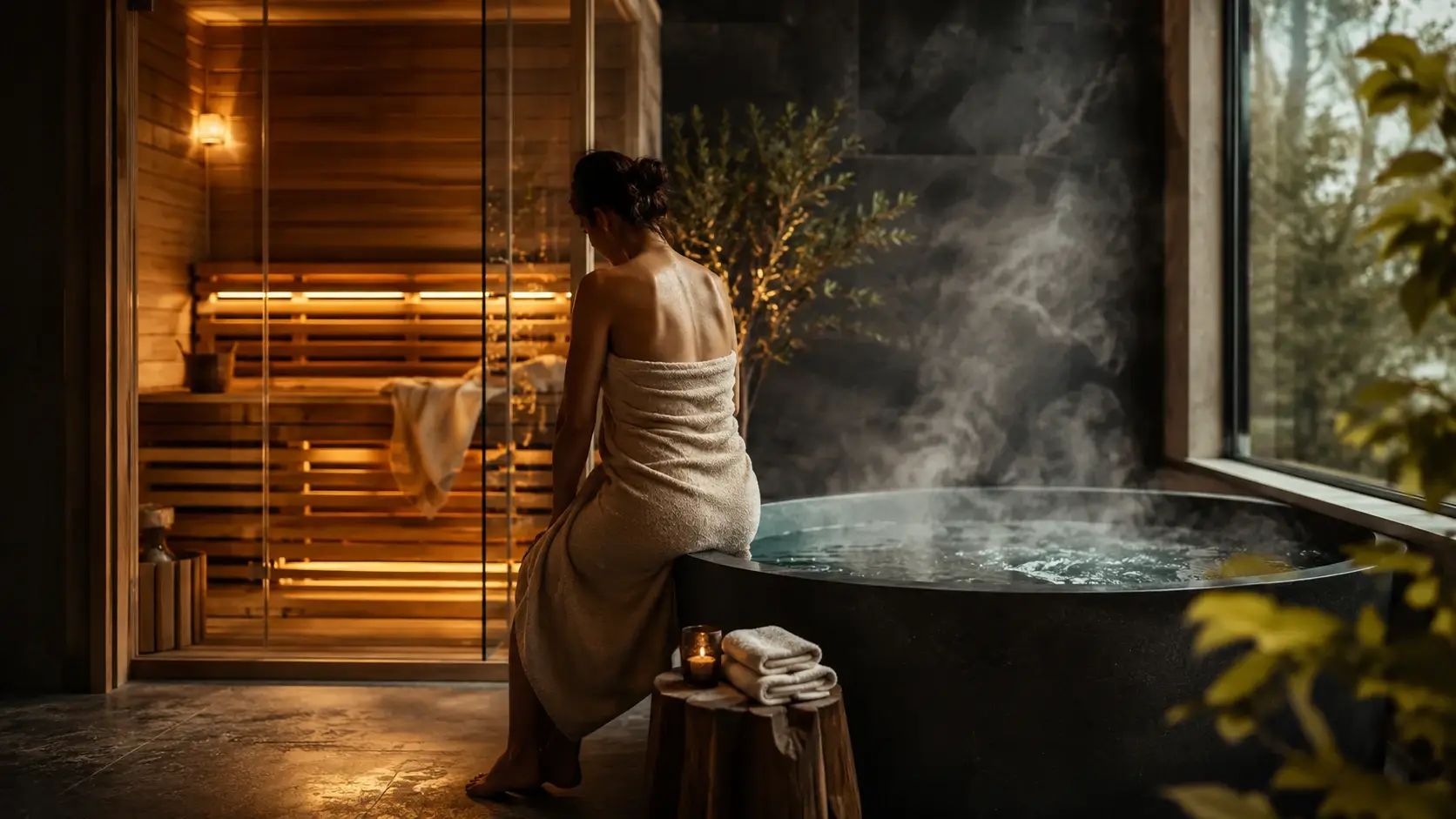
A cold plunge area needs more planning than simply finding room for a tub. Water, slippery surfaces, drainage, towels, ventilation, and movement all affect whether the space feels controlled or inconvenient.
The best cold plunge area ideas organize these practical needs first, then add the visual details that make the space feel intentional.
Give the Tub Breathing Room
Avoid squeezing a plunge tub into the smallest possible corner. You need room to enter and exit without twisting around furniture, shelves, or nearby equipment.
A wider planning perspective can help. Reviewing home layout inspiration highlights how circulation often determines whether a specialty room feels calm or crowded.
Leave at least one side visually open where possible. That open edge becomes especially useful when carrying towels, cleaning equipment, or handling maintenance.
Control Water Before Decorating
Splashes are inevitable. Start with flooring and drainage rather than rugs, stools, or decorative baskets.
Choose a surface that handles repeated moisture and provides dependable footing. If the plunge sits indoors, nearby walls and baseboards should also tolerate occasional water exposure.
Ideas drawn from covered outdoor living areas can be useful because these spaces often solve similar problems involving wet flooring, changing temperatures, and easy-clean surfaces.
| Planning Feature | Main Purpose | Useful Approach |
|---|---|---|
| Slip-resistant floor | Safer footing | Textured water-tolerant finish |
| Nearby drain | Easier water control | Position near splash zone |
| Towel hooks | Faster drying | Mount away from direct spray |
| Open walkway | Easier access | Keep furniture to one side |
Create a Dry Recovery Zone
The area immediately beside the plunge will be wet, but the entire room doesn’t need to be. Create a separate dry zone for sitting, changing, and storing clean items.
A bench positioned a few steps away gives the user somewhere to recover without placing upholstery directly beside the water. Add a small shelf for folded towels and another spot for personal items.
For plunge areas opening toward a yard, broader landscape layout concepts can help organize privacy screens, planted borders, pathways, and surrounding recreation spaces without crowding the tub itself.
Think About Privacy and Visual Screening
A cold plunge can feel exposed even inside a private backyard. Screens, slatted walls, planting, curtains designed for outdoor use, or strategically placed fencing can make the space feel more comfortable.
The goal isn’t necessarily total enclosure. Partial screening often works better because it preserves airflow while blocking the most obvious sight lines.
Indoors, similar separation can be created using a partition, frosted glazing, or a shift in materials between the plunge zone and the rest of the wellness room.
Where Cold Plunge Spaces Often Go Wrong
Crowding is one of the biggest problems. Small side tables, baskets, plants, stools, and decorative accessories can quickly turn a clean wellness setup into an obstacle course.
Another mistake is ignoring where wet towels and footwear will go. Without designated storage, both end up on the floor. Poor drainage can create an even larger maintenance problem, so surface water should be considered before choosing decorative finishes.
Frequently Asked Questions
What should be placed next to a cold plunge tub?
Keep essentials simple: towel hooks, a small shelf, safe flooring, and enough open space for entering and exiting. Seating can sit nearby, but it is generally more useful in a slightly drier recovery area.
Can a cold plunge be installed outdoors?
Many cold plunge setups work outdoors, provided the equipment is designed for the location and the area has suitable drainage, stable footing, privacy, and weather protection where needed.
How can a small cold plunge area feel less crowded?
Use wall-mounted hooks, narrow shelving, and built-in storage instead of multiple freestanding pieces. Keeping one side of the plunge visually open also makes a compact area feel easier to move through.
Plan the Space Around the Routine
A practical plunge area should make every part of the routine easy: entering, exiting, drying off, storing towels, and cleaning afterward. Start with water management and circulation, then build privacy and comfort around those fundamentals. A simpler layout usually performs better than a space filled with wellness-themed accessories.