
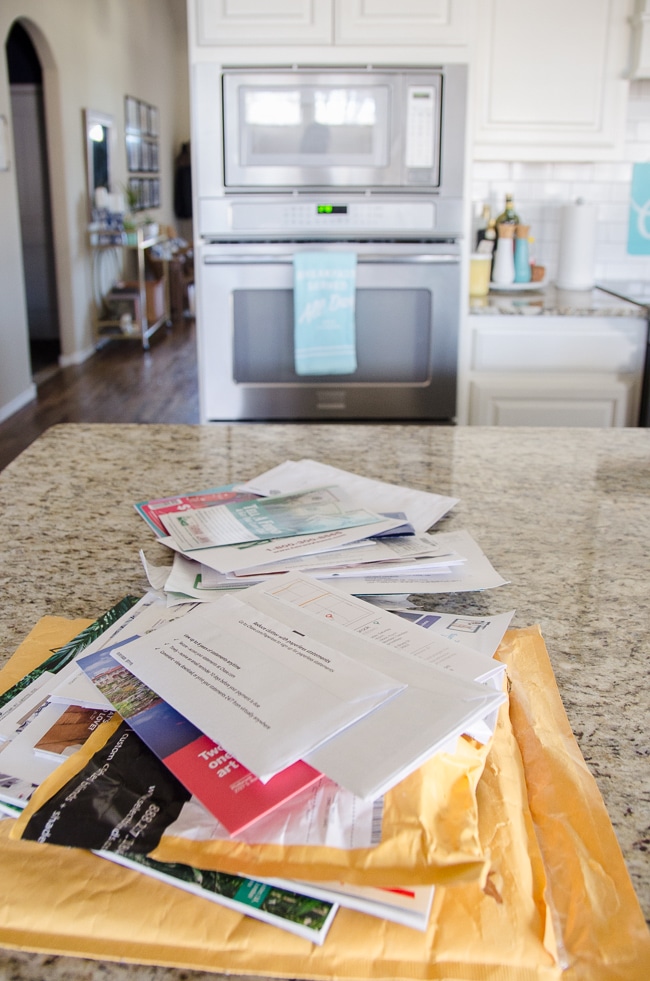
Mail becomes clutter because it often enters the house without having a destination. Effective mail sorting ideas solve that problem by creating a small decision point near the entrance where incoming paper can be opened, filed, recycled, or moved elsewhere.
A useful system doesn’t need much space. It needs clear categories and a regular habit for emptying them.
Create a Landing Zone Close to the Entrance
Choose a location that matches the door you normally use. A narrow console, wall organizer, entry cabinet, kitchen counter section, or mudroom shelf can all work.
The key is consistency. If mail is dropped in three different rooms, even good organizers won’t stop paper from spreading.
Keep the Surface Deliberately Small
A huge tabletop invites piles. A smaller designated area creates a natural limit and encourages faster sorting.
Keep unrelated objects away from the mail zone whenever possible so envelopes don’t disappear under bags, keys, and shopping receipts.
Sort Mail Before It Becomes a Stack
Give incoming paper a few simple destinations, such as “Action,” “File,” and “Recycle.” Bills or forms requiring attention belong in the action category, while statements that must be retained can move to filing.
Readers browsing interior organization references may notice the same principle across many storage problems: fewer clearly defined categories often outperform complicated systems.
Junk mail should ideally go directly into recycling rather than entering the permanent sorting area.
Use Vertical Space Around the Door
Wall pockets, shallow shelves, magnetic organizers, and compact file holders can reduce the amount of furniture needed in a tight entry.
Ideas drawn from entryway design ideas can help when the challenge is combining paper storage with an attractive entrance. The organizer should feel like part of the room rather than a temporary office setup.
Install wall storage where adults can reach it easily without placing sharp corners in a busy walking path.
| Mail Category | Where It Goes | Recommended Action |
|---|---|---|
| Bills/forms | Action tray | Review promptly |
| Important records | File slot | Move to permanent file |
| Invitations | Calendar area | Record dates |
| Junk mail | Recycling | Discard immediately |
Give Important Papers a Second Destination
The entry station should not become permanent document storage. Once something is processed, move it to a filing cabinet, household binder, desk, or secure record box.
General home layout inspiration can help identify a secondary storage location away from the door. This separation keeps the entry functional while protecting papers that need long-term retention.
A small transfer basket can help if your permanent filing area is in another room.
Add a Routine Instead of More Containers
Even a perfect organizer eventually fills up. Set a recurring time to clear the action tray, file completed paperwork, and recycle expired notices.
For many households, a brief weekly review is enough. If paperwork arrives heavily, a faster schedule may be necessary.
The routine should also include checking school notices, appointment letters, coupons, and other time-sensitive items before they become irrelevant.
Common Mail-Storage Mistakes
Using one basket for everything only hides the pile. The clutter remains; it has simply gained a container.
Another mistake is keeping documents because they might be useful someday. Permanent storage should be reserved for papers with a genuine legal, financial, household, or personal purpose.
Avoid placing sensitive mail where visitors can easily read it. Open shelving may look neat, but private documents deserve a more protected location.
Frequently Asked Questions
How many mail-sorting categories should a household use?
Three or four categories are enough for many homes. Action, file, recycle, and possibly one category for another household member create clear decisions without making the system unnecessarily complicated.
What can I use instead of a mail organizer?
A shallow drawer, wall pocket, magazine holder, small tray set, or divided basket can work. The important feature is separation between papers requiring different actions.
How do I stop junk mail from piling up?
Sort it immediately after bringing the mail inside. Keep a recycling container near the sorting area so unwanted envelopes, flyers, and inserts don’t spend several days on the entry table.
Give Every Piece of Paper a Next Step
Paper clutter shrinks when incoming mail stops being treated as one category. Create a compact landing zone, make each destination obvious, and move permanent records elsewhere after processing.
The biggest improvement often comes from the routine rather than the organizer. A few minutes of regular sorting can keep an entry looking clear even during weeks when paperwork arrives heavily.